Skip to content
Auto Sisepuhastus logo: car interior cleaning and polishing in Tallinn and Harju County
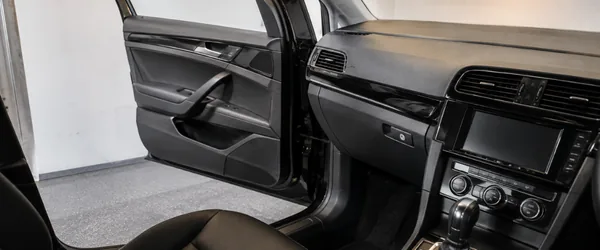
Dark car with its passenger door open in a white workshop. After iron deposit removal, acid residue is rinsed away before drying.

Tallinn’s #1 car interior cleaning company

Tar and iron deposit removal in Tallinn

Auto Sisepuhastus removes iron deposits, tar, tree resin and cement splashes from car paintwork in Tallinn and Harju County. These contaminants cling to the clear coat and do not come off in a regular foam wash.

Iron deposits are airborne metal particles from brakes and the road that stick to paintwork and rust. Tar comes from fresh asphalt, where hot bitumen can be thrown onto the lower body panels as you drive.

  • Licensed and insured
  • 100% satisfaction guarantee
  • Tar and iron deposit removal from €74

Tar and iron deposit removal services

Stickers, tree sap, insects and cement splashes each need a suitable remover; a final clay treatment smooths the surface. By the end of 2025, we had treated 1,026 cars: 742 for tar and iron deposits with claying, 117 for cement splashes, 96 for stickers and 71 for sap and insects.

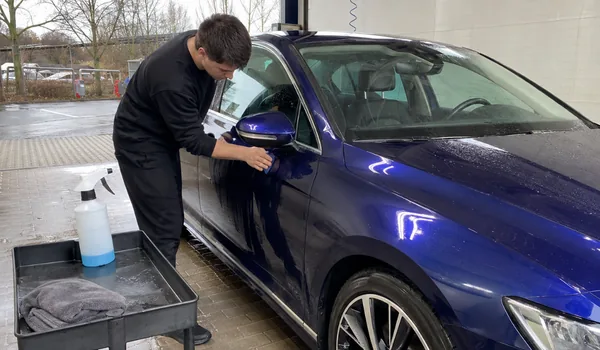
  • Hand claying a wet dark-blue car door with dedicated clay lubricant; car shampoo would dry too quickly on the surface.

    Clay bar treatment

    With lubricant, synthetic clay lifts bonded dust and metal particles from paintwork and leaves it smooth.

    The technician folds the clay to expose a clean inner surface after every few passes, then checks the finish with a plastic-bag test: a hand inside the bag should glide silently over the paint.

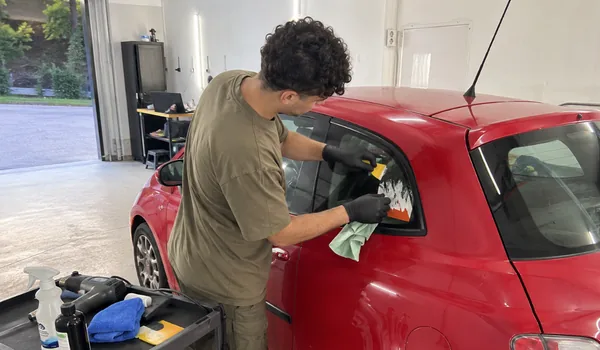
  • Removing stickers and adhesive residues from the side window of the red car with a plastic scraper, after removing the sticker from the rear window, it is checked that all the heating wires are heated.

    Sticker and adhesive residue removal

    We remove film labels, advertising stickers and parking permits without leaving the adhesive strips that cold scraping can create.

    A heat gun at 80 °C softens the adhesive before we use a plastic scraper. We dissolve any residue with a citrus solvent instead of a stronger petroleum product that could harm the clear coat.

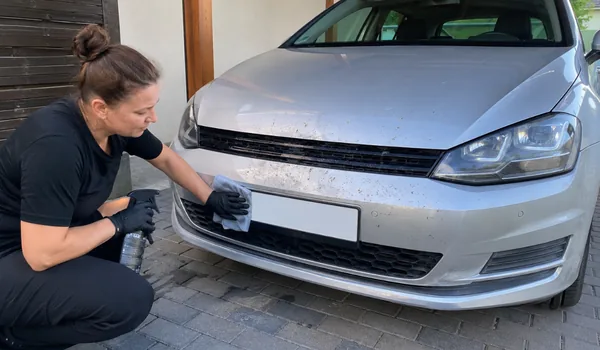
  • Removing tree resin and insects, the hardened resin drop is never scraped with a fingernail, because the drop tears off a piece of clear coat with it.

    Tree sap and insect residue removal

    We remove spruce and pine sap and insect residue from glass and front panels. Left in place through summer, these contaminants can etch the clear coat.

    Auto Sisepuhastus recommends removing the resin drops as soon as they are noticed, because untreated spruce or pine resin will etch a visible mark on the clear coat in 3 weeks in direct sunlight.

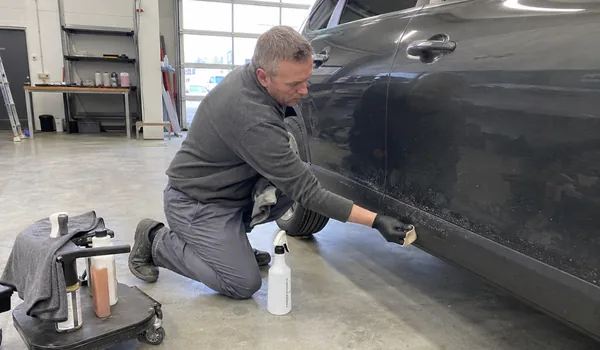
  • Removal of cement and paint splashes, hardened splashes are softened with a wet compress before scraping.

    Cement and paint splash removal

    Cement dust from construction sites and paint splashes from freshly painted fences need different removal products.

    We test a small area first. Cement hardens as it dries; an overly mild product may leave a mark, while one that is too strong can damage the clear coat.

Tar and iron deposit removal prices

The price of tar and iron deposit removal is determined by the type of contamination and the contaminated area. The prices are calculated for a medium-sized passenger car.

ServicePrice
Tar and iron deposit removalfrom €74
Clay bar treatment, whole carfrom €55
Sticker and adhesive removal, one stickerfrom €40
Tree resin and insect removal, priced by areafrom €20
Cement and paint splash removalfrom €65

The main factors affecting the price are:

  • Type of contamination: metallic, organic and mineral contamination require different chemicals
  • Size of damaged area, single spray versus whole body coating
  • Age of contamination: tar and cement that have been standing longer are harder to come off
  • Claying: it is included in the price of rust removal, separately ordered claying of the whole body costs from 55 euros
  • Whether polishing or ceramic coating is desired at the same visit

How long does tar and iron deposit removal take?

The removal of all the iron deposits from the body with subsequent claying takes 3 hours for a medium-sized passenger car. Claying is part of the removal of iron deposits, because clay completely pulls out the last particles left on the surface after chemical treatment. In 2025, there were 142 tar and iron deposits job sheets.

The removal of a single drop of resin or tar takes 20 minutes a piece, and a drop that has been on the surface for longer will be soaked under the solvent for a longer time. We calculate the time cost of several drops based on the number of drops, not the price of the whole body.

Testing and removal of cement spatter, including inspection of a sample area before treating the entire surface, takes 45 minutes. Cement that has been standing for several weeks and hardened is mechanically scraped before chemistry, which prolongs the work.

We will respond to the request within one hour on business days, and the car with iron deposits can be booked into the Mustamäe workshop within three business days.

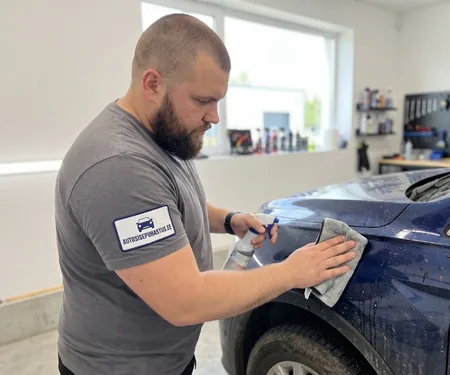
A technician removes iron deposits from the front wing of a dark blue car with a spray and cloth, finer clay is chosen for car brands with softer paint.
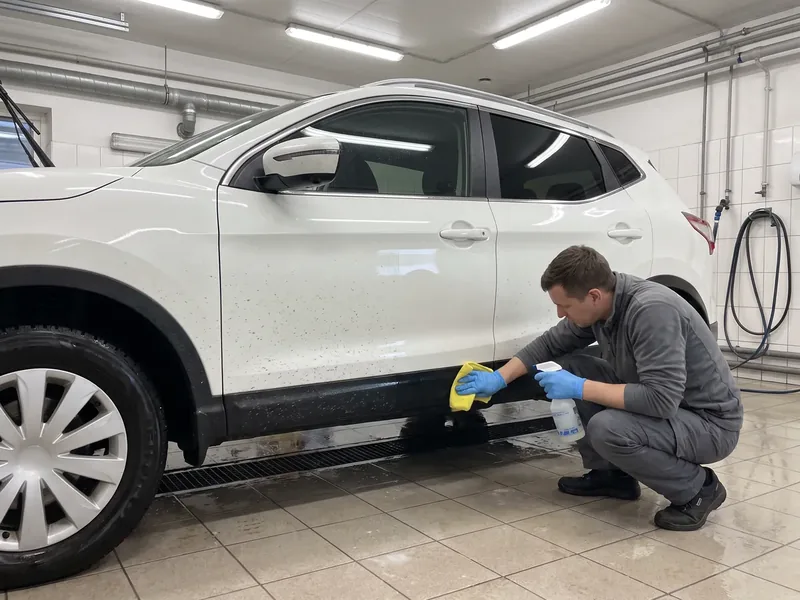
White SUV doors with cement spots, a crouching technician cleans the threshold with a sprayer and yellow cloth in a tiled wash box, a piece of clay is warmed to softness in warm water before use.

Removing cement splashes and iron deposits near Vaskjala Reservoir

Car owner: Arvi K., site manager of the construction company. Where did the car come from: Near the Vaskjala reservoir, Rae parish.

1. Inspection and identification of the type of contamination: There were 46 flaking cement spots on the driver's side doors and sill, and iron particles from the angle grinder felt like rough sandpaper under the finger on the bonnet and roof.

2. Targeted chemical treatment of cement: The concentration of slightly acidic and wheel-safe agent was selected according to the sample area, and the testing and removal lasted 45 minutes.

3. Targeted chemical treatment of the metal: the acidic iron deposits remover was left on for 5 minutes and rinsed off when the violet colour change ended.

4. Claying and handover: The entire body was clayed, the plastic bag test was silent on all 13 panels, and it was written on the job sheet that the thresholds need ceramic coating for protection.

Cost: Removal of cement and paint splashes: 1 × €65; removal of tar and iron deposits, claying included: 1 × €74; pick-up and drop-off from the Peetri Selver parking lot: 2 × 13 km × €1.02 = €26.52. The total amount of job sheet No. 14,027 including VAT is €165.52 and the construction company paid by bank transfer based on this invoice.

Project time in 2025: 3 hours 45 minutes of work, of which the test and removal of cement splashes took 45 minutes, and the removal of iron deposits with claying took 3 hours. The SUV handed over in the morning at the Peetri Selver parking lot was back there in the afternoon of the same day.

What changed: All 46 cement blobs came off the driver's side doors and door sills, and the hand in the plastic bag slides silently across the body.

How we work

Contamination is detected with a finger, removed with chemistry and finished with clay.

  1. 1. Inspection and Identification of contamination Type

    On the phone, you describe where the contamination comes from, on the spot we identify the exact type by touch and sight: iron deposits feels like rough sandpaper under your finger, tar sticks to your finger and cement peels off in layers.

  2. 2. Targeted Chemical Processing

    For each type of contamination, a product suitable for that chemistry is applied, never using one universal spray for everything. The reaction is monitored on the surface before the agent is rinsed off, as rinsing too early leaves some of the contamination behind.

  3. 3. Claying and Transfer

    After chemical treatment, the surface is completely smoothed with clay and checked with a plastic bag test. Regarding the work, we write on the job sheet what contamination was removed and which parts of the lower part of the body need polishing or ceramic coating for protection.

How the Type of Contaminant Determines the Chemical

The wrong chemical used on the wrong contamination will leave the contamination and damage the paintwork.

Metallic Contamination: iron deposits and Brake Dust

Iron deposits remover is an acidic liquid that chemically dissolves the rust bond between the metal particle and the clear coat: the reaction is visible as a colour change from violet to deep red until the particle has come off the surface. The product is left on for 5 minutes, as earlier rinsing leaves the reaction unfinished.

Organic contamination: tar, Resin and Insects

Tar, resin, and insect residue dissolve with an oil-based solvent, not an acid, because they are fatty compounds, not metal. Never use an acidic iron deposits remover on organic contaminants because the two chemicals react with each other, not with the contaminants.

Mineral contamination: Cement and Concrete Dust

Cement and concrete dust are alkaline and require a mildly acidic wheel-safe cleaner to dissolve the mineral bond. We always choose the concentration according to the test area, because a layer that has been standing for several months needs a stronger agent than freshly dried cement.

Frequently asked questions

What are iron deposits and where do they come from?

Iron deposits are metal particles released by brake discs and pads. They bond to paintwork and rust, collecting most heavily near the front wheels and lower body panels.

Will a regular wash remove iron deposits?

No, ordinary foam washing does not dissolve the rust bond between the iron deposits and the clear coat. This requires an acidic iron deposits remover that chemically dissolves the bond.

How long does tar and iron deposit removal take?

The removal of the entire bodywork iron deposits together with claying takes 3 hours. It takes 20 minutes to remove a single drop of tar or resin.

Can a clay bar scratch paintwork?

No, the synthetic clay glides over the surface with the rinse fluid without adding pressure, only pulling the attached particles into the clay. The piece of clay is folded in half every few strokes to keep the unused inner part clean.

How much does tar and iron deposit removal cost?

Tar and iron deposit removal with claying starts at €74. A separate whole-car clay treatment starts at €55, and cement splash removal at €65.

Why do different contaminants need different treatments?

Each type of contamination requires a tool with a different chemistry: metallic contamination is acidic, organic contamination is oil-based, and mineral contamination is a slightly acidic wheel compound. The wrong tool will leave contamination or damage the clear coat.

When should the car be cleaned of iron deposits in the spring?

During the winter, salty road mud with iron deposits accumulates on the lower part of the body during the salting process. We recommend ordering cleaning in the spring after the salting season is over.

How quickly can an appointment be arranged?

We will respond to the request within one hour on business days, and the car with iron deposits can be booked into the Mustamäe workshop within three business days. You can make an appointment by phone or in the inquiry form, and the answer will be the first available appointment time.

Ask for a Quote for tar and iron deposit removal

Send tar and iron deposits request via the form below or book an appointment by phone +372 XXXX XXXX. Describe what type of contamination it is and how large an area it occurs, and the price and first available appointment at the Mustamäe workshop will be provided in our reply.

Call the workshop +372 XXXX XXXX
  • Licensed and insured
  • 100% satisfaction guarantee

Name and either a phone number or email address are required.

Call the workshop +372 XXXX XXXX